A career change resume has to answer one question quickly: why should someone from a different field be hired for this role? The answer comes from transferable results, new skills with proof, and a summary that connects the two. This guide shows how to structure it, and Edesy Resume's job match shows which keywords from the new field your resume already covers.
Name the target role, your previous field and the bridge between them in 40-90 words.
Put skills for the new role first. Only list tools you have used in projects, courses or work.
Place new-field projects above experience. Treat each like a job with tools, scope and results.
Keep past roles, but rewrite bullets to highlight transferable results such as analysis, stakeholder work or process improvement.
Recent courses and certifications in the new field, with completion year.
Degree and year. Relevant new diplomas can go above older degrees.
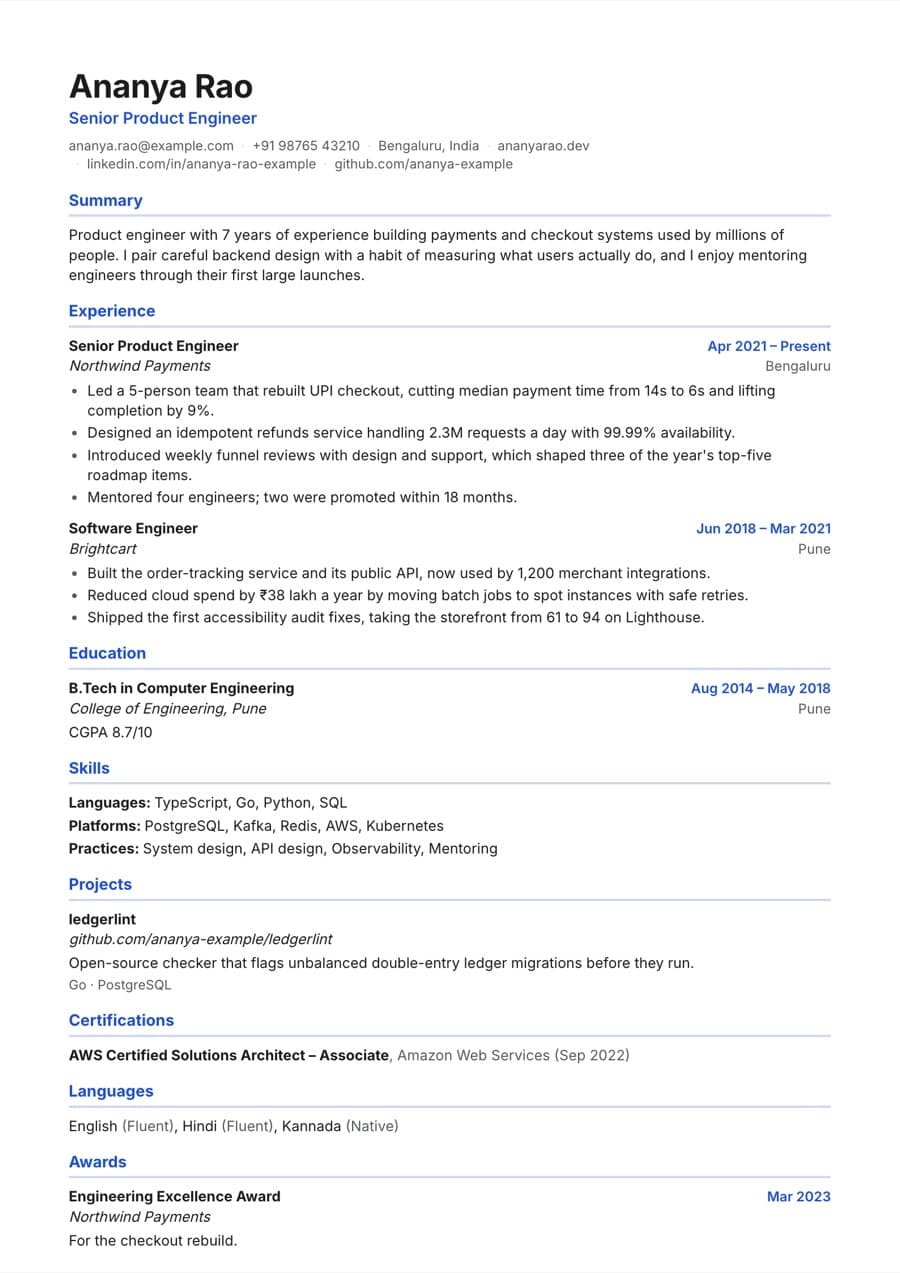
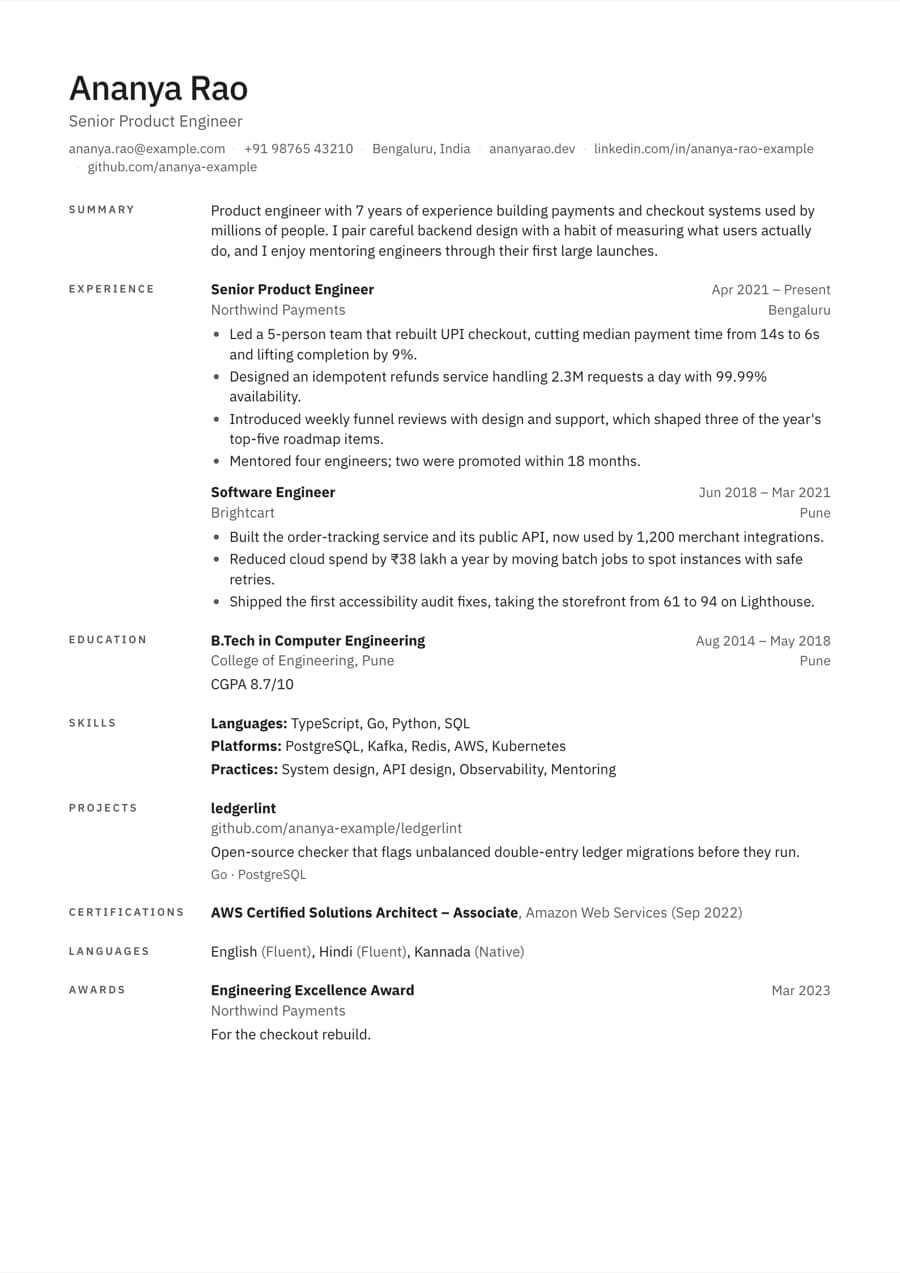
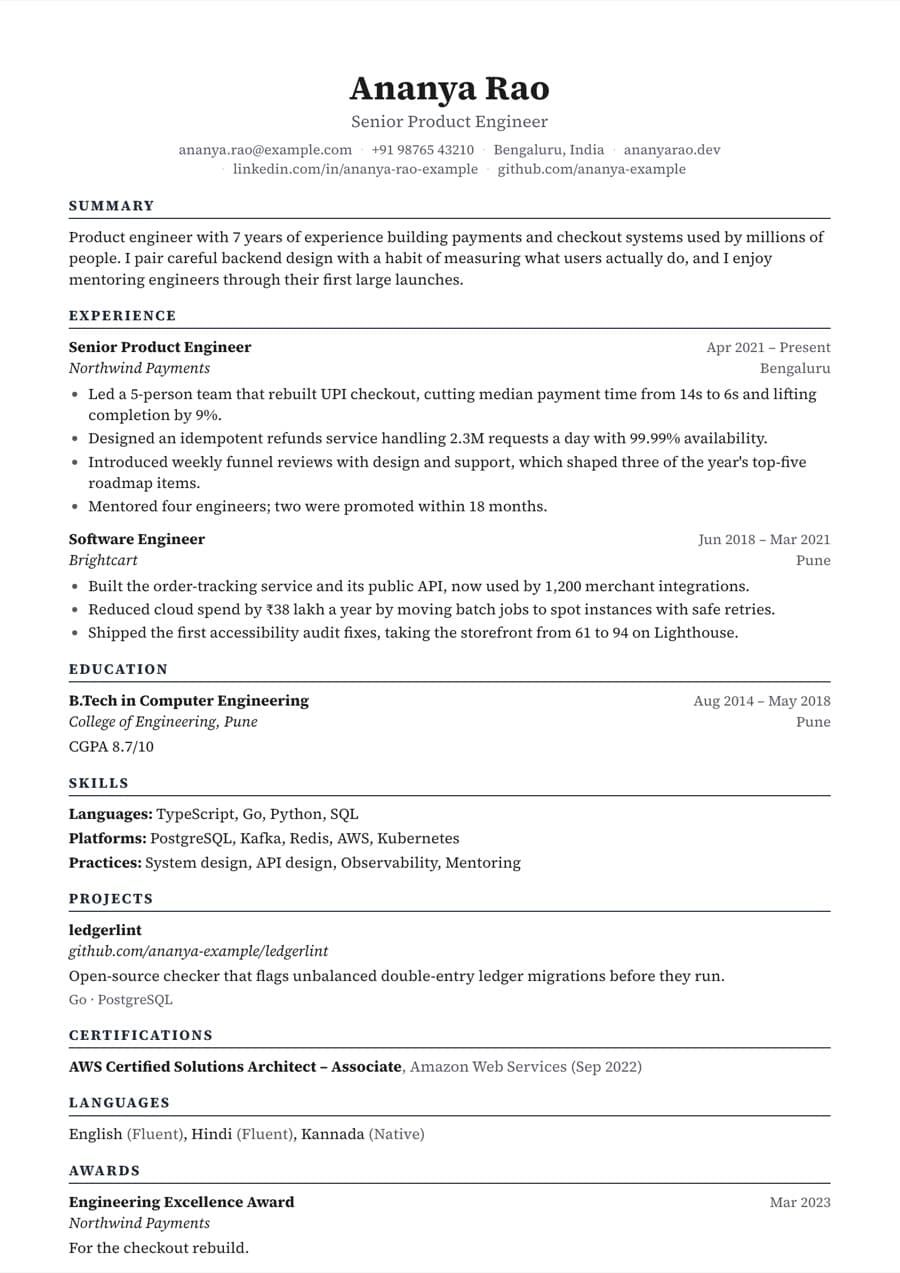
Fictional examples. Replace numbers in brackets with your own real results.
Stuck on wording? The AI resume writer improves your bullets using only facts already in your resume.
Paste a job posting and Edesy Resume compares it with your resume.
Edesy Resume can rewrite weak bullet points, generate bullets for a role, draft a professional summary and suggest skills your resume already shows but does not list.
Edesy Resume drafts a cover letter from two things you already have: your resume and the job posting.
Start from an example or import your old resume, check your score, then download a PDF or Word file for free.